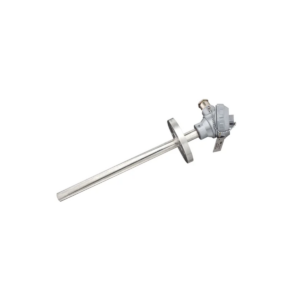
Introduction to RTDs (Resistance Temperature Detectors)
Temperature measurement is a critical parameter across industrial processes, from chemical plants and refineries to pharmaceuticals, food processing, and energy systems. Among the most reliable and accurate temperature sensing technologies are RTDs (Resistance Temperature Detectors). RTDs operate on the principle that the electrical resistance of certain metals, particularly platinum, changes predictably with temperature. This characteristic allows RTDs to provide precise and repeatable temperature readings, making them indispensable in industries where accuracy, stability, and reliability are paramount.
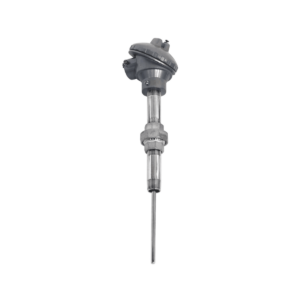
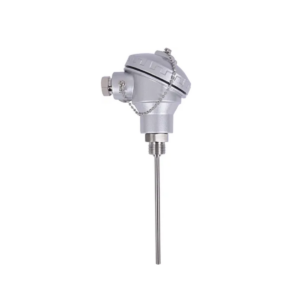
At NPK Industries, we offer a comprehensive range of RTDs from leading brands, including Baumer (R01, R02, TE2), Radix (RHW), and GIC (RTD101). Our RTDs are engineered to perform in diverse industrial environments, ensuring seamless integration with your temperature measurement and control systems.
Resistance Temperature Detectors (RTDs) consist of a sensing element, typically made of platinum (Pt100, Pt500, Pt1000), nickel, or copper, encapsulated in a protective sheath. The resistance of this element increases with temperature in a known, linear, and repeatable manner. By measuring the resistance, a temperature value can be accurately calculated using established conversion standards such as IEC 60751 for platinum RTDs.
Key Principles:
Linear Response: RTDs offer nearly linear resistance changes over a wide temperature range, making them easier to calibrate and integrate with industrial controllers.
High Accuracy: Typical RTDs provide accuracies from ±0.1°C to ±0.5°C, suitable for critical process control.
Stability: RTDs exhibit minimal drift over time, ensuring long-term reliability.
Wide Temperature Range: Depending on the type, RTDs can measure from -200°C to +850°C, accommodating cryogenic and high-temperature applications.
Types of RTDs Offered
At NPK Industries, we provide a variety of RTDs to suit different industrial requirements. Below is a detailed overview of each brand and model:
1. Baumer RTDs – R01, R02, TE2
Baumer is renowned for its precision engineering in industrial measurement solutions. Their RTDs are widely used in automation, pharmaceutical, and process industries.
Features & Applications:
R01 Series: Compact, robust RTDs ideal for standard process pipelines and industrial environments. Offers high accuracy (±0.3°C) and fast response times for critical process monitoring.
R02 Series: Enhanced resistance to vibration, corrosion, and thermal cycling. Suitable for applications with fluctuating temperatures and harsh industrial conditions.
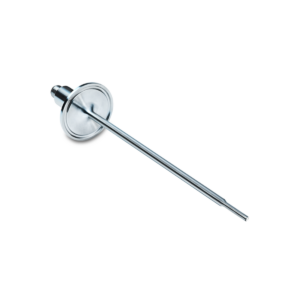
TE2 Series: Fully customizable RTDs with protective housings and integrated transmitters. Designed for use in food, beverage, and pharmaceutical applications where hygienic design and CIP/SIP compatibility are crucial.
Technical Specifications:
Parameter
R01
R02
TE2
Sensor Type
Pt100, Pt500, Pt1000
Pt100, Pt500, Pt1000
Pt100, Pt500, Pt1000
Accuracy
±0.3°C
±0.25°C
±0.1°C
Temperature Range
-50°C to +400°C
-50°C to +500°C
-200°C to +600°C
Process Connection
Threaded, Flanged
Threaded, Flanged
Tri-Clamp, Hygienic
Response Time
2–10 sec
2–8 sec
<1 sec
Housing
Stainless Steel
Stainless Steel
Stainless Steel, Hygienic
2. Radix RTDs – RHW Series
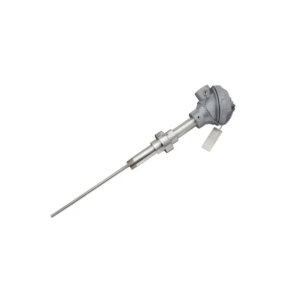
Radix RHW series RTDs are known for high precision and reliability in demanding industrial applications. They combine robust construction with cost-effective performance.
Features & Applications:
Designed for chemical, petrochemical, and power generation industries.
Wide temperature ranges suitable for high-temperature processes and cryogenic applications.
Available in both 2-wire, 3-wire, and 4-wire configurations for flexible integration.
Technical Specifications:
Parameter
RHW
Sensor Type
Pt100, Pt500
Accuracy
±0.2°C
Temperature Range
-100°C to +500°C
Process Connection
Threaded, Flanged
Response Time
3–10 sec
Housing
Stainless Steel, Explosion-proof options available
3. GIC RTDs – RTD101 Series
GIC RTDs are ideal for industrial and laboratory-grade temperature measurement, offering reliable accuracy and long-term stability.
Features & Applications:
High-precision resistance sensors for process monitoring and automation.
Suitable for HVAC, chemical reactors, and food processing lines.
Resistant to mechanical stress, vibration, and temperature cycling.
Technical Specifications:
Parameter
RTD101
Sensor Type
Pt100
Accuracy
±0.3°C
Temperature Range
-50°C to +400°C
Process Connection
Threaded or Flanged
Response Time
2–8 sec
Housing
Stainless Steel
Advantages of RTDs in Industrial Applications
RTDs offer several advantages over other temperature sensing technologies like thermocouples or thermistors:
High Accuracy & Repeatability: RTDs are preferred where precise temperature control is critical, such as pharmaceutical dosing, food processing, and chemical reactions.
Stability & Reliability: RTDs maintain calibration over long periods and under harsh operating conditions.
Wide Measurement Range: From cryogenic (-200°C) to high-temperature (+850°C) processes.
Resistance to Corrosion & Contamination: Especially with stainless steel housings and hygienic designs.
Integration with Automation Systems: Compatible with PLCs, SCADA, and DCS systems using standard 2-wire, 3-wire, or 4-wire configurations.
Low Maintenance: Robust construction ensures minimal downtime and operational disruption.
Installation & Best Practices
To achieve optimal performance and longevity of RTDs:
Wiring Considerations: Use 3-wire or 4-wire configurations for long cable runs to eliminate lead resistance errors.
Proper Mounting: Ensure secure and vibration-free installation in pipelines or reactors.
Calibration: Regular calibration ensures measurement accuracy and process compliance.
Environmental Protection: Select proper housing for extreme temperatures, humidity, or exposure to aggressive chemicals.
Hygienic Applications: For food, beverage, and pharmaceutical industries, select RTDs with Tri-Clamp or hygienic fittings compatible with CIP/SIP cleaning.
Applications of RTDs
RTDs are used extensively across industries for critical temperature measurement:
Pharmaceutical & Biotech: Precise temperature control for fermentation, sterilization, and process monitoring.
Food & Beverage: Dairy, brewing, and beverage lines require hygienic RTDs with fast response times.
Chemical & Petrochemical: High-accuracy temperature sensors for chemical reactors, distillation, and safety monitoring.
Power & Energy: Steam, condensate, and boiler feed monitoring in power plants.
HVAC & Building Automation: Monitoring ambient and process temperatures in commercial and industrial facilities.
Why Choose NPK Industries for RTDs
At NPK Industries, we provide end-to-end solutions for temperature measurement:
Wide range of high-precision RTDs from trusted brands (Baumer, Radix, GIC).
Expert guidance for selecting the right RTD based on temperature range, accuracy, and process requirements.
Comprehensive after-sales support, calibration services, and installation guidance.
Hygienic, industrial, and high-temperature solutions tailored for your specific industry.
Commitment to quality, reliability, and ISO-certified manufacturing standards.