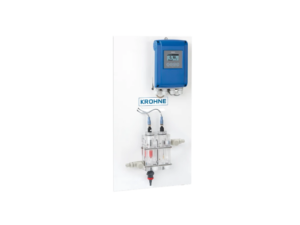
Free Residual Chlorine (FRC) Monitoring — Critical for Disinfection and Compliance
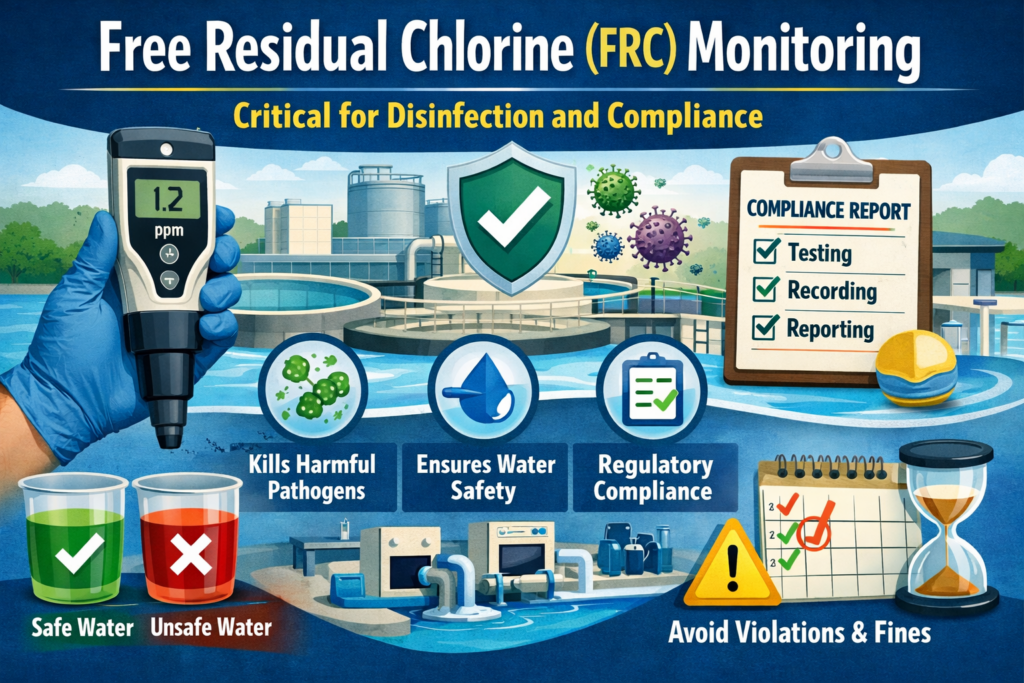
In water and wastewater management, FRC (Free Residual Chlorine) or free chlorine measurement is a cornerstone of effective disinfection and public health protection. Free residual chlorine refers to chlorine species such as hypochlorous acid (HOCl) and hypochlorite ion (OCl–) that remain in treated water after primary disinfection and continue to provide antimicrobial activity. Accurate online FRC monitoring ensures that sufficiently high disinfectant concentrations are maintained to inactivate harmful pathogens without overdosing chemicals, which can result in taste/odor issues, corrosion, regulatory non-compliance, and elevated operational costs.
Online chlorine analyzers like the Forbes Marshall Optisens CL1100 and Hach SC4500 are engineered to deliver continuous, high-precision measurements of free residual chlorine in a diverse range of water and wastewater environments. These instruments provide real-time data feedback that supports automated dosing, improves safety, and guarantees adherence to stringent discharge and potable water standards, such as those mandated by regulatory bodies (CPCB, EPA and local SPCBs) for effluent quality and drinking water supply.
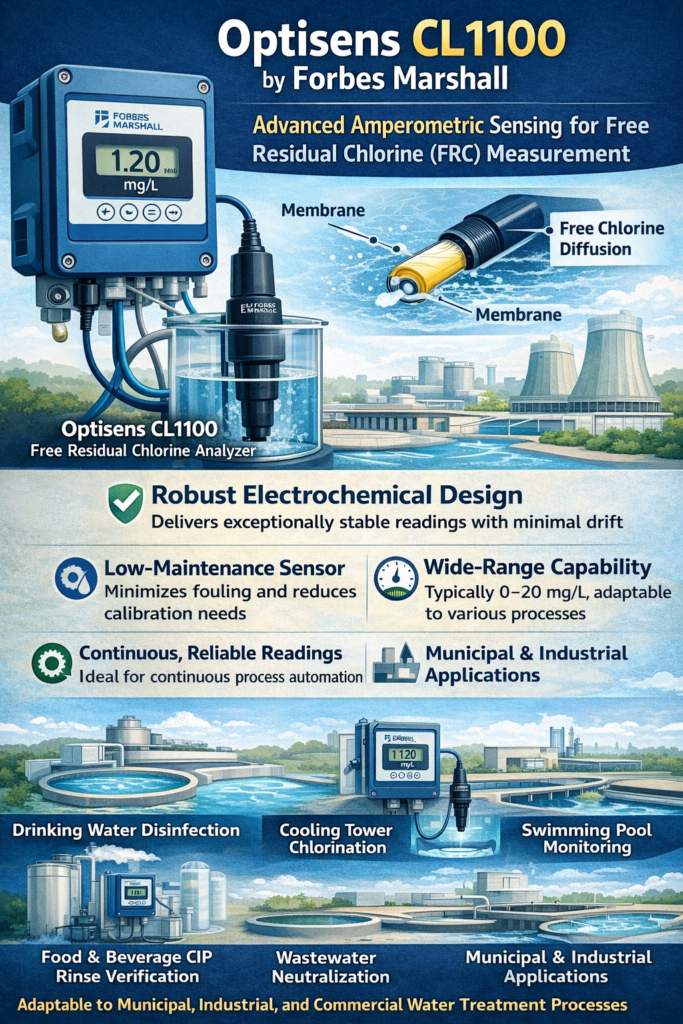
The Optisens CL1100 by Forbes Marshall uses advanced amperometric sensing principles specifically optimized for Free Residual Chlorine (FRC) measurement. In the amperometric method, free chlorine diffuses through a specialized membrane to reach the electrochemical electrode surface, where it generates a current proportional to concentration. The Optisens CL1100’s robust electrochemical design delivers exceptionally stable readings with minimal drift over long operating cycles — a vital requirement for continuous process automation. Its low-maintenance sensor architecture minimizes fouling and electrode wear, reducing the need for frequent calibration or manual intervention. Wide-range measurement capability (typically 0–20 mg/L) makes the Optisens CL1100 adaptable to municipal and industrial processes alike, including drinking water disinfection validation, cooling tower chlorination, swimming pool water quality control, food & beverage CIP rinse water verification, and wastewater neutralization.
Integrated temperature compensation ensures consistent measurement accuracy across varying water temperatures (0–50°C), a common operational reality in treatment plants. Combined with both digital and analog outputs, the Optisens CL1100 seamlessly connects with PLC, SCADA or DCS systems for real-time plant control, alarm signaling, and historical data logging. For treatment plants prioritizing chemical efficiency and regulatory assurance, the Optisens CL1100 enables precise chlorine dosing that prevents under-treatment (which risks pathogen survival) and over-chlorination (which increases chemical costs and disinfection by-product formation).
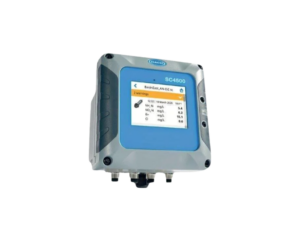
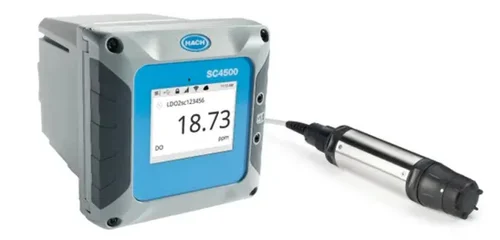
The Hach SC4500 further expands on chlorine measurement capabilities by providing a modular platform that integrates turbidity, dissolved oxygen, and chlorine sensing within one rugged instrument. Hach’s chlorine module also uses amperometric sensing technology to detect both free and total chlorine with minimal calibration and long-term stability, even in challenging environments with high total dissolved solids (TDS) or chemical interferences. Its robust IP67 housing protects the sensor electronics from dust and moisture, allowing the SC4500 to be installed directly in industrial and municipal process areas without extensive protective enclosures.
One of the SC4500’s technical advantages is its diagnostic capability: built-in sensor health checks automatically detect fouling, membrane condition, and lamp performance (in optical sub-modules), ensuring that measurement integrity is maintained and operators are notified of potential issues before they impact data reliability. This high level of self-monitoring reduces downtime, extends maintenance intervals, and improves overall plant confidence in automated disinfection control.
Applications for the Hach SC4500 are wide and include monitoring industrial effluent chlorine residuals prior to discharge, potable water disinfection control in municipal systems, chemical process control in manufacturing utilities, protection of cooling water circuits, and safeguarding RO membranes from biological fouling. Because the SC4500 supports integration with modern process control architectures, it serves both operational efficiency goals and compliance documentation needs by providing continuous, time-stamped chlorine concentration logs.
Accurate FRC measurement using instruments like the Optisens CL1100 and Hach SC4500 delivers measurable benefits for water treatment operations. By maintaining chlorine residuals within target ranges, treatment plants can minimize chemical wastage, prevent microbial regrowth, reduce disinfection by-product formation, and ensure consistent compliance with discharge and potable water quality norms. Automated chlorine monitoring also enhances plant safety by eliminating manual grab sampling, reducing operator exposure to hazardous chemicals, and enabling remote control and alarm capabilities through SCADA/DCS systems.
From an SEO perspective, content that emphasizes “Free Residual Chlorine Analyzer for STP/ETP,” “Industrial Chlorine Sensor,” “Online FRC Monitoring System,” “Forbes Marshall Optisens CL1100 Chlorine Meter,” and “Hach SC4500 Chlorine Sensor Integration” creates strong keyword relevance for buyers, plant engineers, and compliance officers searching for chlorine measurement solutions in India and global markets. As regulatory requirements evolve and demand for automated water quality assurance grows, online content that thoroughly explains FRC measurement technology, applications, and benefits will attract targeted organic traffic and accelerate lead generation for analytical instrument suppliers and integrators.
In summary, Free Residual Chlorine measurement is indispensable in water treatment ecosystems where safety, compliance, and operational excellence are priorities. Instruments like the Forbes Marshall Optisens CL1100 and Hach SC4500 provide dependable, accurate, and low-maintenance analytical performance that supports real-time process optimization, energy and chemical cost reduction, and reliable documentation for regulatory reporting. When integrated with plant control systems, these analyzers form the backbone of modern disinfection monitoring strategies, delivering clarity, control, and confidence for water and wastewater treatment professionals.