Ultrasonic Level Transmitter – Technical Overview, Working Principle & Product Line-Up (LU240, UNAM Series)
Ultrasonic level measurement is one of the most widely adopted non-contact technologies for continuous level monitoring in liquids, slurries, and selected bulk solids. It offers a powerful combination of reliability, cost efficiency, zero process contact, and compatibility with aggressive or contaminated media. Due to these advantages, ultrasonic technology is extensively used across industries such as water and wastewater treatment, chemicals, food and beverage, pharmaceuticals, power generation, cement, metals, and OEM machinery manufacturing.
A modern ultrasonic level transmitter eliminates direct contact with the process medium, thereby avoiding corrosion, coating, mechanical wear, or contamination. This makes it an ideal choice for applications involving acids, wastewater, sludge, foaming liquids, or hygienic processes where sensor cleanliness is critical.
Principle of Ultrasonic Level Measurement
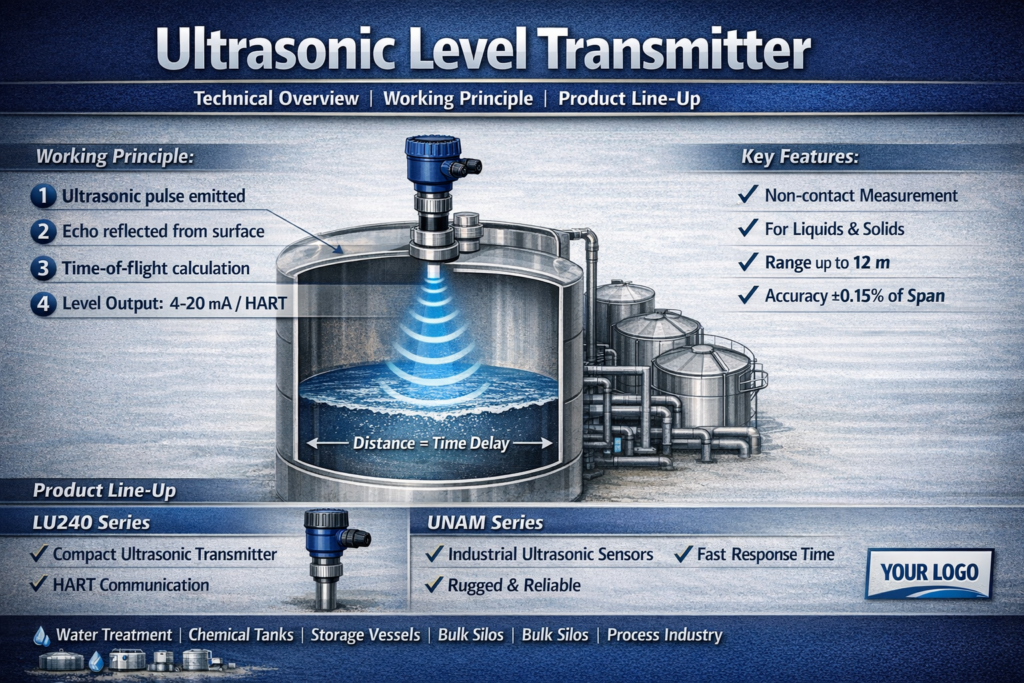
Ultrasonic level measurement works on the time-of-flight (TOF) principle. The transmitter emits high-frequency ultrasonic pulses, typically in the range of 30 kHz to 70 kHz, toward the surface of the material being measured. These sound waves reflect from the surface and return to the sensor.
The transmitter calculates the distance to the material surface based on the time taken for the echo to return. Using preconfigured tank geometry, span, and zero settings, this distance is converted into a continuous level signal.
Technical Working Formula
The distance calculation follows the formula:
Distance = (Speed of Sound × Time of Flight) ÷ 2
The speed of sound varies with temperature, which makes automatic temperature compensation an essential feature in modern devices. Advanced ultrasonic transmitters continuously adjust the sound velocity to maintain stable accuracy under changing ambient conditions.
Advanced Signal Processing in Ultrasonic Devices
Modern ultrasonic instruments incorporate sophisticated electronics and digital processing to ensure stable and accurate measurement even in challenging installations. These systems are designed to suppress false echoes caused by tank walls, agitators, ladders, or internal structures.
Key embedded technologies include digital signal processing, dynamic echo evaluation, adaptive beam shaping, and intelligent filtering algorithms. These features allow ultrasonic instruments to perform reliably in turbulent liquids, foamy surfaces, and non-ideal tank geometries.
Key Technical Features of Modern Ultrasonic Technology
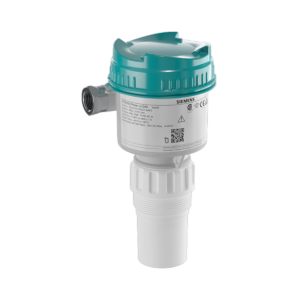
The Siemens Sitrans Probe LU240 is a compact, intelligent ultrasonic transmitter designed for continuous level measurement in liquids and slurries. It belongs to the Siemens Sitrans family and is widely installed in water treatment plants, storage tanks, pumping stations, and chemical processing facilities.
This device combines sensing and electronics into a single integrated housing, simplifying installation while improving long-term reliability. Its design makes it particularly suitable for applications requiring stable measurement with minimal maintenance.
Technical Advantages of Siemens LU240
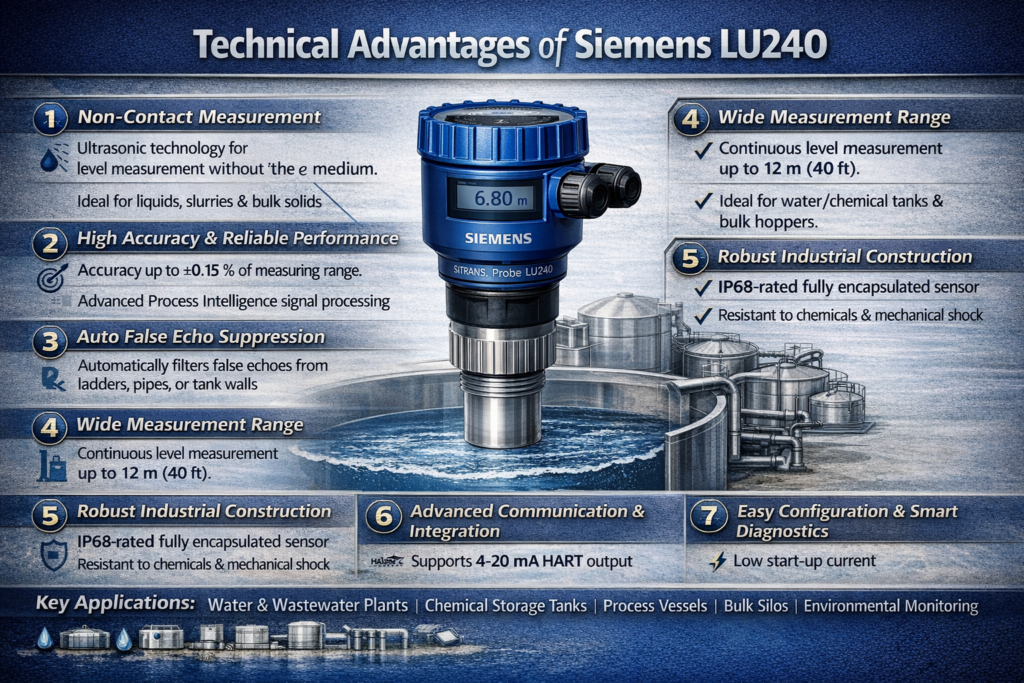
1. Integrated One-Piece Construction The sensor and electronics are housed together, reducing cabling complexity and installation time.
2. Advanced Echo Processing The transmitter uses enhanced auto false-echo suppression and echo profile mapping, ensuring stable performance even in tanks with internal obstructions or mixers.
3. Industrial Communication Support Standard 4–20 mA output and HART 7 communication allow seamless integration with PLC, SCADA, and DCS systems, including Siemens SIMATIC environments.
4. Accurate Temperature Compensation An integrated temperature sensor continuously adjusts sound velocity, maintaining level accuracy down to millimeter resolution.
5. Rugged Environmental Protection IP67 and IP68 housing options enable use in outdoor locations and partially submerged installations.
Typical Applications of Siemens LU240
Water and wastewater treatment tanks
Pump sumps and lift stations
Chemical storage vessels
Slurry and sedimentation tanks
Open channel flow measurement with weirs or flumes
OEM skids and packaged systems
Technical Specifications – Siemens LU240
Parameter
Specification
Measuring Range
Up to 12 m (model dependent)
Operating Frequency
30–50 kHz
Accuracy
±3 mm or 0.2% of range
Output
4–20 mA, HART 7
Housing Protection
IP67 / IP68
Materials
PVDF, PP, Stainless Steel
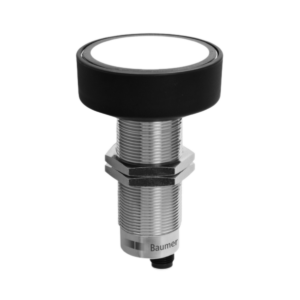
Baumer UNAM Series – Ultrasonic Sensors for Automation & OEM Applications
The Baumer UNAM series is a versatile range of ultrasonic sensors designed for both level and distance measurement in industrial automation environments. These sensors are widely used in OEM machinery, packaging lines, material handling systems, and compact industrial tanks.
Baumer ultrasonic sensors are known for their compact construction, fast response time, and high measurement resolution. They are especially suitable where space constraints and quick installation are important.
Technical Strengths of Baumer UNAM Sensors
High-Precision Ultrasonic Performance The UNAM series offers fine resolution and excellent repeatability, making it suitable for automated processes requiring stable feedback.
Maintenance-Free Non-Contact Operation Measurement is unaffected by color, transparency, surface texture, or dielectric constant of the target medium.
Compact Mechanical Design Available in M18 and M30 cylindrical housings, enabling easy retrofitting in existing machinery.
Smart Configuration Features Teach-in calibration allows fast setup, while internal compensation algorithms ensure consistent readings across temperature variations.
Flexible Output Options Analog outputs and switching signals make the sensors compatible with a wide range of PLC and control systems.
Applications of Baumer UNAM Sensors
Level monitoring in chemical and food tanks
Dry-run protection for pumps
Bulk material height measurement
Conveyor alignment and box detection
Distance monitoring in packaging machines
Automation and robotic systems
Technical Specifications – Baumer UNAM
Parameter
Specification
Measuring Range
30 mm to 6,000 mm
Output
4–20 mA / 0–10 V / Switching
Housing
M18 / M30
Protection
IP67 / IP69K
Accuracy
±1% of range
Special Functions
Teach-in, temperature compensation
Comparison – Siemens LU240 vs Baumer UNAM
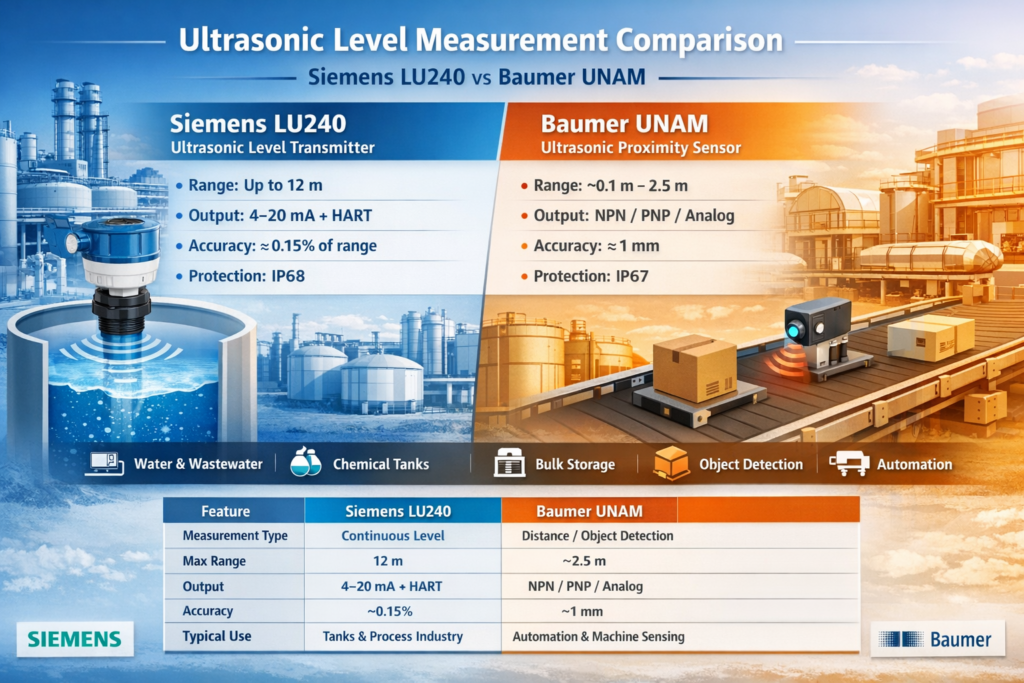
The two product families serve different but complementary industrial needs.
Siemens LU240 is optimized for process industries and large tanks
Baumer UNAM is ideal for automation, OEM machinery, and compact installations
LU240 offers advanced diagnostics and long-range measurement
UNAM provides fast response and flexible mounting
Choosing the correct device depends on installation environment, measurement range, communication needs, and process criticality.
Benefits of Ultrasonic Level Measurement in Industry
Non-contact technology eliminates corrosion and contamination risks. No moving parts result in long service life and low maintenance. Safe operation with aggressive, corrosive, or dirty media. Cost-effective alternative to radar for many applications. Simple installation with minimal calibration effort. Reliable operation independent of pressure, density, or conductivity.
Industries Using Ultrasonic Level Transmitters
Water and wastewater treatment
Chemical processing plants
Food and beverage manufacturing
Pharmaceutical production
Power generation facilities
Cement and mining operations
Pulp and paper industriesOEM machine manufacturing