Pencil Type Pressure Transmitters – Compact, Fast & High-Accuracy Pressure Monitoring for Industrial Automation
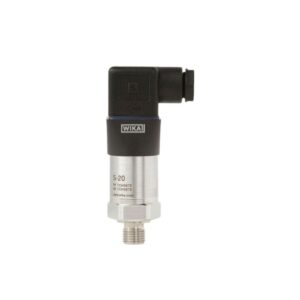
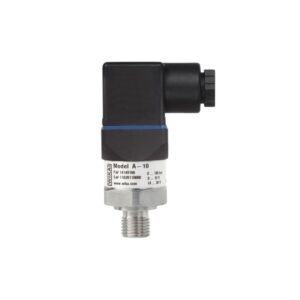
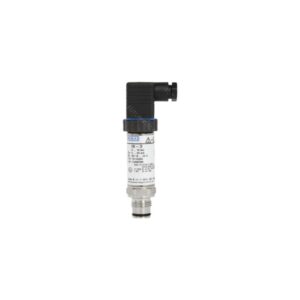
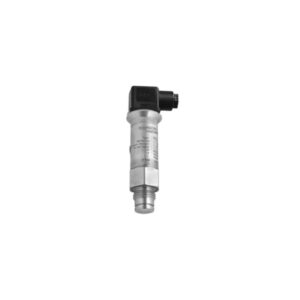
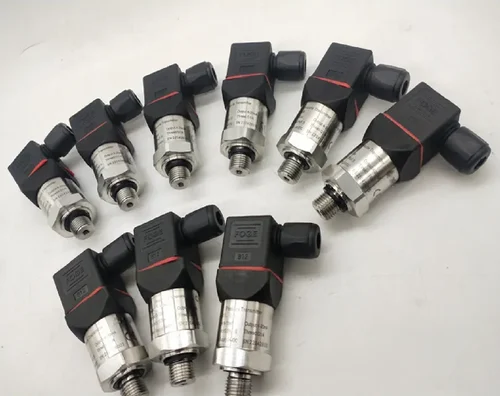
Pencil-type pressure transmitters are compact, high-performance instruments designed for precise pressure monitoring in applications where space is restricted, response time is critical, and continuous high-accuracy measurement is required. Their slim cylindrical “pencil-shaped” geometry makes them ideal for OEM machines, hydraulics, compact skids, and pneumatic systems.
At NPK Industries, we supply, configure, commission & service pencil-type transmitters for industries such as dairy, food, pharma, chemical, utilities, OEM manufacturing, packaging, HVAC, compressors, and automation systems.
1. What Are Pencil-Type Pressure Transmitters?
Pencil-type (or compact-body) pressure transmitters are miniature yet industrial-grade transmitters designed for:
✔ Tight installation spaces
✔ High vibration conditions
✔ Fast dynamic response
✔ Accurate pressure measurement for liquids, gases, oils & inert gases
✔ OEM equipment where standard-size transmitters cannot fit
They offer outstanding benefits such as short response time, rugged stainless-steel construction, integrated electronics, and 4–20 mA or IO-Link/HART outputs.
2. Technical Description (Construction & Components)
a) Mechanical Construction
- Housing: Slim cylindrical SS304/SS316 body
- Diameter: ~19–22 mm (varies by model)
- Ingress protection: IP65 / IP67 / IP69K (model-dependent)
- Process connections:
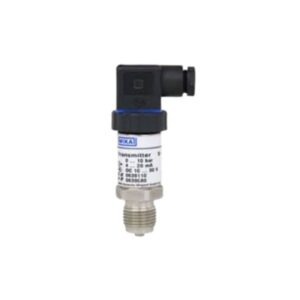
- G 1/4”, 1/4″ NPT, M12x1, G1/2 sanitary (WIKA S11)
- Pressure ranges: Vacuum to 0…1000 bar (model-specific)
- Thin-film or piezoresistive silicon sensor
- Welded stainless-steel diaphragm
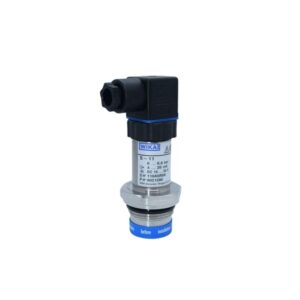
- Optional flush-diaphragm (WIKA S11) for viscous media
c) Electronics
- ASIC-based signal conditioning
- Temperature compensation
- 4–20 mA (2-wire)
- IO-Link / HART (select models)
- Overvoltage, reverse polarity & short-circuit protection
- M12 connector
- DIN plug
- Integrated cable
3. Working Principle – How a Pencil-Type Pressure Transmitter Works
Pressure transmitters use piezoresistive or thin-film strain-gauge technology:
Step-by-step Working:
- Process pressure acts on the stainless-steel diaphragm.
- Pressure is transferred to the internal piezoresistive sensor chip.
- The chip changes resistance when pressure deforms its structure.
- This resistance change is converted into a proportional electrical signal.
- Built-in electronics amplify, linearize & temperature-compensate the signal.
- Final output is provided as 4–20 mA or digital (IO-Link/HART).
Key Technical Advantages:
Fast response (<10 ms)
Long-term stability
Compact yet industrial-grade design
Accurate across wide temperatures
Suitable for both static & dynamic pressure
4. Brand Comparison – Baumer vs WIKA
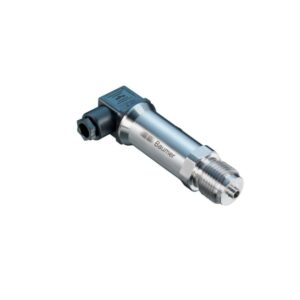
Feature | Baumer Y91/Y92 | WIKA S10 | WIKA S11 (Flush) | WIKA IS3 | WIKA A10 | WIKA S20 |
Accuracy | ±0.5% FS | ±0.25% | Hygienic flush diaphragm | ±0.25% | ±0.5% | ±0.2% |
Size | Very compact | Compact | Flush-diaphragm | Compact industrial | Economical OEM | Premium industrial |
Output | 4–20 mA | 4–20 mA | 4–20 mA | 4–20 mA | 4–20 mA | 4–20 mA / HART |
Process Connection | G1/4, NPT, M12 | G1/4, NPT | Hygienic G1/2 | G1/4, NPT | G1/4 | G1/4, NPT |
Pressure Range | Up to 600 bar | Up to 1000 bar | Up to 40 bar | Up to 600 bar | Up to 600 bar | Up to 1600 bar |
Best For | OEM automation | Industrial | Hygienic media | Industrial oil/gas | OEM cost-effective | High-performance industrial |
Key Insights:
Baumer Y91/Y92 → extremely compact & reliable for OEM machinery
WIKA S10/S20 → industry-standard for high accuracy
WIKA S11 → flush diaphragm makes it ideal for viscous & hygienic food/pharma media
WIKA A10 → economic yet stable for HVAC, packaging, OEM automation
WIKA IS3 → robust for oil & gas, heavy-duty equipment
5. Troubleshooting Guide
Issue | Possible Cause | Action |
No Output | Reverse polarity | Correct wiring |
Erratic Reading | Vibration, EMI | Shield cable, isolate vibration |
Sudden zero-shift | Overpressure event | Perform zero reset |
Slow response | Clogged port | Clean or use flush diaphragm |
Temperature drift | Harsh ambient conditions | Use model with better compensation |