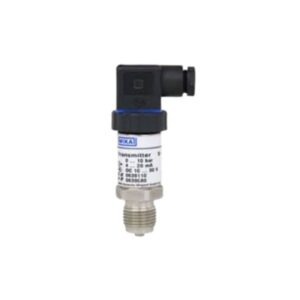
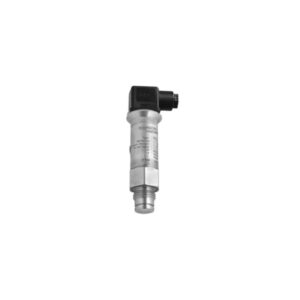
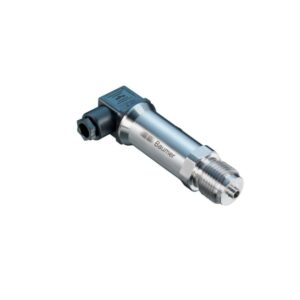
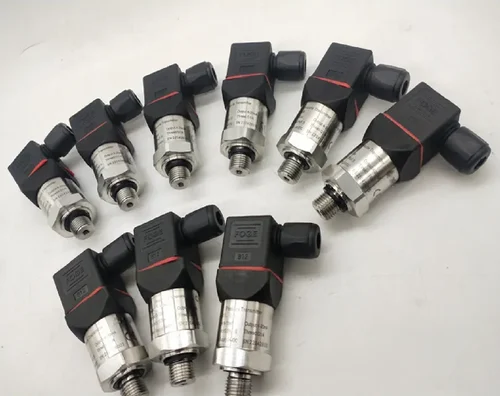
Pencil Type Pressure Transmitters – Compact, Fast & High-Accuracy Pressure Monitoring for Industrial Automation

Pencil-type pressure transmitters are compact, high-performance instruments designed for precise pressure monitoring in applications where space is restricted, response time is critical, and continuous high-accuracy measurement is required. Their slim cylindrical “pencil-shaped” geometry makes them ideal for OEM machines, hydraulics, compact skids, and pneumatic systems.

At NPK Industries, we supply, configure, commission & service pencil-type transmitters for industries such as dairy, food, pharma, chemical, utilities, OEM manufacturing, packaging, HVAC, compressors, and automation systems.

1. What Are Pencil-Type Pressure Transmitters?

Pencil-type (or compact-body) pressure transmitters are miniature yet industrial-grade transmitters designed for:

✔ Tight installation spaces
✔ High vibration conditions
✔ Fast dynamic response
✔ Accurate pressure measurement for liquids, gases, oils & inert gases
✔ OEM equipment where standard-size transmitters cannot fit

They offer outstanding benefits such as short response time, rugged stainless-steel construction, integrated electronics, and 4–20 mA or IO-Link/HART outputs.

2. Technical Description (Construction & Components)


a) Mechanical Construction

  • Housing: Slim cylindrical SS304/SS316 body
  • Diameter: ~19–22 mm (varies by model)
  • Ingress protection: IP65 / IP67 / IP69K (model-dependent)
  • Process connections:
    • G 1/4”, 1/4″ NPT, M12x1, G1/2 sanitary (WIKA S11)
  • Pressure ranges: Vacuum to 0…1000 bar (model-specific)
 
b) Sensing Element
  • Thin-film or piezoresistive silicon sensor
  • Welded stainless-steel diaphragm
  • Optional flush-diaphragm (WIKA S11) for viscous media


c) Electronics
  • ASIC-based signal conditioning
  • Temperature compensation
  • 4–20 mA (2-wire)
  • IO-Link / HART (select models)
  • Overvoltage, reverse polarity & short-circuit protection
 
      d) Electrical Connections
  • M12 connector
  • DIN plug
  • Integrated cable  

3. Working Principle – How a Pencil-Type Pressure Transmitter Works

Pressure transmitters use piezoresistive or thin-film strain-gauge technology:

Step-by-step Working:

  1. Process pressure acts on the stainless-steel diaphragm.
  2. Pressure is transferred to the internal piezoresistive sensor chip.
  3. The chip changes resistance when pressure deforms its structure.
  4. This resistance change is converted into a proportional electrical signal.
  5. Built-in electronics amplify, linearize & temperature-compensate the signal.
  6. Final output is provided as 4–20 mA or digital (IO-Link/HART).

Key Technical Advantages:

✔ Fast response (<10 ms)
✔ Long-term stability
✔ Compact yet industrial-grade design
✔ Accurate across wide temperatures
✔ Suitable for both static & dynamic pressure

4. Brand Comparison – Baumer vs WIKA

Feature

Baumer Y91/Y92

WIKA S10

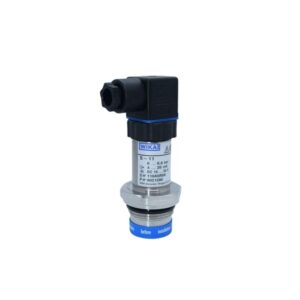
WIKA S11 (Flush)

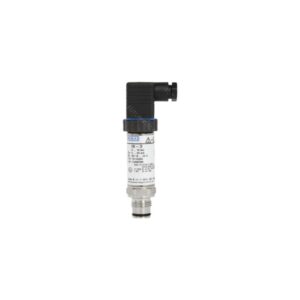
WIKA IS3

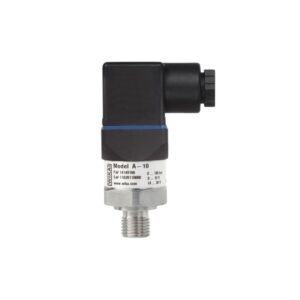
WIKA A10

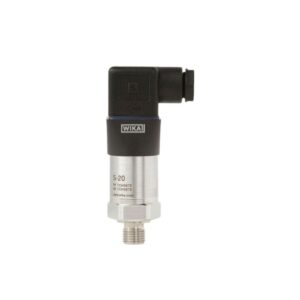
WIKA S20

Accuracy

±0.5% FS

±0.25%

Hygienic flush diaphragm

±0.25%

±0.5%

±0.2%

Size

Very compact

Compact

Flush-diaphragm

Compact industrial

Economical OEM

Premium industrial

Output

4–20 mA

4–20 mA

4–20 mA

4–20 mA

4–20 mA

4–20 mA / HART

Process Connection

G1/4, NPT, M12

G1/4, NPT

Hygienic G1/2

G1/4, NPT

G1/4

G1/4, NPT

Pressure Range

Up to 600 bar

Up to 1000 bar

Up to 40 bar

Up to 600 bar

Up to 600 bar

Up to 1600 bar

Best For

OEM automation

Industrial

Hygienic media

Industrial oil/gas

OEM cost-effective

High-performance industrial

Key Insights:

Baumer Y91/Y92 → extremely compact & reliable for OEM machinery

WIKA S10/S20 → industry-standard for high accuracy

WIKA S11 → flush diaphragm makes it ideal for viscous & hygienic food/pharma media

WIKA A10 → economic yet stable for HVAC, packaging, OEM automation

WIKA IS3 → robust for oil & gas, heavy-duty equipment

 5. Troubleshooting Guide

Issue

Possible Cause

Action

No Output

Reverse polarity

Correct wiring

Erratic Reading

Vibration, EMI

Shield cable, isolate vibration

Sudden zero-shift

Overpressure event

Perform zero reset

Slow response

Clogged port

Clean or use flush diaphragm

Temperature drift

Harsh ambient conditions

Use model with better compensation