In industries where process conditions are extreme and measurement reliability is non-negotiable, the Displacer Level Transmitter remains one of the most trusted and time-tested level measurement technologies. Unlike modern non-contact instruments that rely on electromagnetic or acoustic principles, displacer technology is based on fundamental physics, offering unmatched stability in applications involving high pressure, high temperature, steam, corrosive liquids, and multi-phase media. Its ability to perform consistently over decades makes it a preferred choice in power plants, refineries, petrochemical units, and heavy chemical industries.
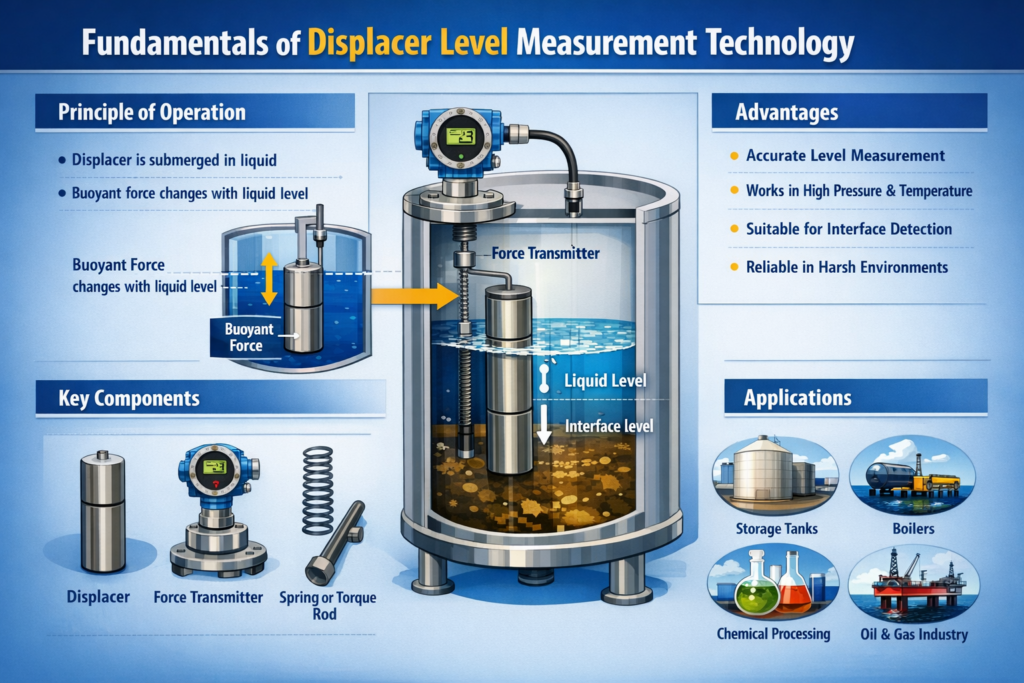
Fundamentals of Displacer Level Measurement Technology
The Displacer Level Transmitter operates on Archimedes’ principle of buoyancy, where a body immersed in a liquid experiences an upward force proportional to the density of the liquid and the submerged volume. This mechanical principle ensures measurement accuracy remains unaffected by electrical properties, surface conditions, or vapor presence. As the liquid level changes, the buoyant force acting on the displacer varies, creating a measurable mechanical movement that is converted into an electrical signal.
This fundamental approach provides long-term repeatability and makes the technology ideal for continuous level, interface, and density measurement in demanding industrial environments.
Working Principle – How Displacer Measurement Delivers Accuracy
In a Displacer Level Transmitter, a cylindrical or shaped displacer is vertically suspended inside a chamber or vessel. As the process liquid level rises or falls, the submerged volume of the displacer changes accordingly. This change in buoyant force is transmitted through a torque tube or force-balance mechanism to the sensing element.
The buoyant force acting on the displacer is defined as:
Fb = ρ × g × V
Where liquid density, gravitational acceleration, and submerged volume collectively determine the force. The transmitter electronics convert this mechanical force into a standardized output signal, typically 4–20 mA with optional digital communication, ensuring precise and stable level indication.
Why Displacer Technology Excels in Harsh Process Conditions
The Displacer Level Transmitter is uniquely suited for applications where other technologies struggle due to foam, turbulence, flashing liquids, or extreme temperatures. Since the measurement depends purely on buoyancy, factors such as vapor layers, dielectric constant changes, or conductivity variations have no impact on accuracy.
This makes the technology exceptionally reliable in boilers, separators, reboilers, and high-pressure vessels where process conditions are continuously changing.
Schneider Electric Foxboro 244LD – Industry Benchmark Solution
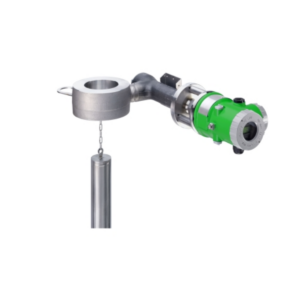
Among globally recognized instruments, the Schneider Electric Foxboro 244LD stands out as a high-performance Displacer Level Transmitter engineered for critical industrial applications. It combines rugged mechanical design with intelligent electronics, offering reliable level, interface, and density measurement across a wide range of operating conditions.
The 244LD is designed to deliver consistent performance even in applications involving extreme thermal stress, mechanical vibration, and corrosive media, making it a preferred choice in process industries worldwide.
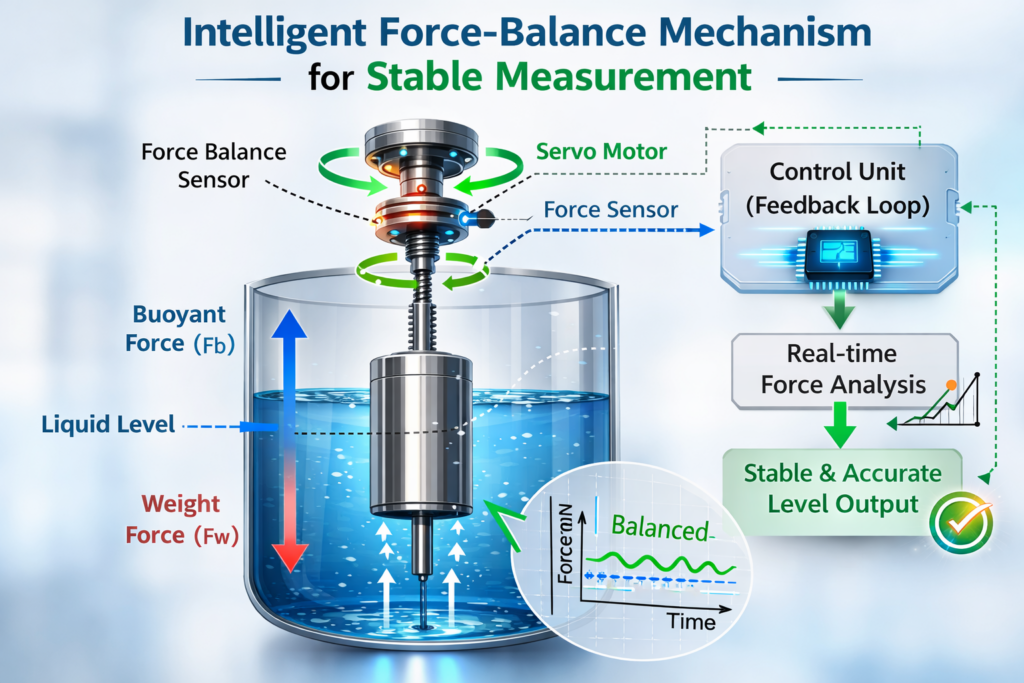
Intelligent Force-Balance Mechanism for Stable Measurement
At the core of the Foxboro 244LD Displacer Level Transmitter is an advanced force-balance system that minimizes friction and hysteresis. This design ensures smooth movement of the torque tube and accurate force transmission to the sensor, resulting in stable output even during rapid process fluctuations.
The force-balance approach enhances repeatability and reduces long-term drift, which is essential for applications where precise level control directly impacts plant safety and efficiency.
Advanced Output & Communication Capabilities
Modern industrial automation demands seamless integration, and the Displacer Level Transmitter from Schneider Electric meets this requirement with industry-standard outputs. The Foxboro 244LD supports 4–20 mA analog signals along with HART communication, allowing remote configuration, diagnostics, and calibration.
This digital capability enables integration with PLC, DCS, and SCADA systems, supporting predictive maintenance strategies and reducing unplanned downtime.
Built for Extreme Temperature and Pressure Environments
One of the defining strengths of the Displacer Level Transmitter is its ability to operate reliably in high-temperature and high-pressure processes. The Foxboro 244LD can withstand temperatures up to 400°C and pressures exceeding 200 bar, depending on the chamber configuration.
This capability makes it especially suitable for steam drums, feedwater heaters, and hydrocarbon processing units where conventional electronic sensors may fail or lose accuracy.
Immunity to Foam, Vapors, and Process Coating
In many industrial applications, foam formation and vapor layers pose significant challenges for level measurement. A Displacer Level Transmitter remains unaffected by these conditions because buoyancy is independent of surface disturbances.
Even in processes where product buildup or coating occurs, the mechanical principle ensures consistent performance, significantly reducing the need for frequent recalibration or cleaning.
Interface and Density Measurement Capability
Beyond simple level measurement, the Displacer Level Transmitter excels in interface detection between two liquids of different densities. This capability is critical in oil-water separation, condensate management, and multiphase chemical processes.
The Foxboro 244LD can also be configured for density measurement, providing valuable process data that supports quality control, efficiency optimization, and safety monitoring.
Typical Industrial Applications of Foxboro 244LD
The versatility of the Displacer Level Transmitter allows it to serve a wide range of industries. In oil and gas facilities, it is commonly used in separators, distillation columns, and crude storage tanks. Refineries rely on it for reboilers, reactors, and solvent recovery systems where reliability is critical.
In power plants, the Foxboro 244LD is widely trusted for boiler drum level measurement, feedwater systems, and condensate tanks, where accurate level control directly impacts operational safety.
Installation Flexibility for Diverse Process Requirements
A major advantage of the Displacer Level Transmitter is its flexible installation options. The Foxboro 244LD can be mounted externally in a cage chamber, which allows easy maintenance and stable measurement under high pressure and temperature conditions.
In applications where external mounting is not feasible, in-tank installation options are available, ensuring adaptability across different vessel designs and process layouts.
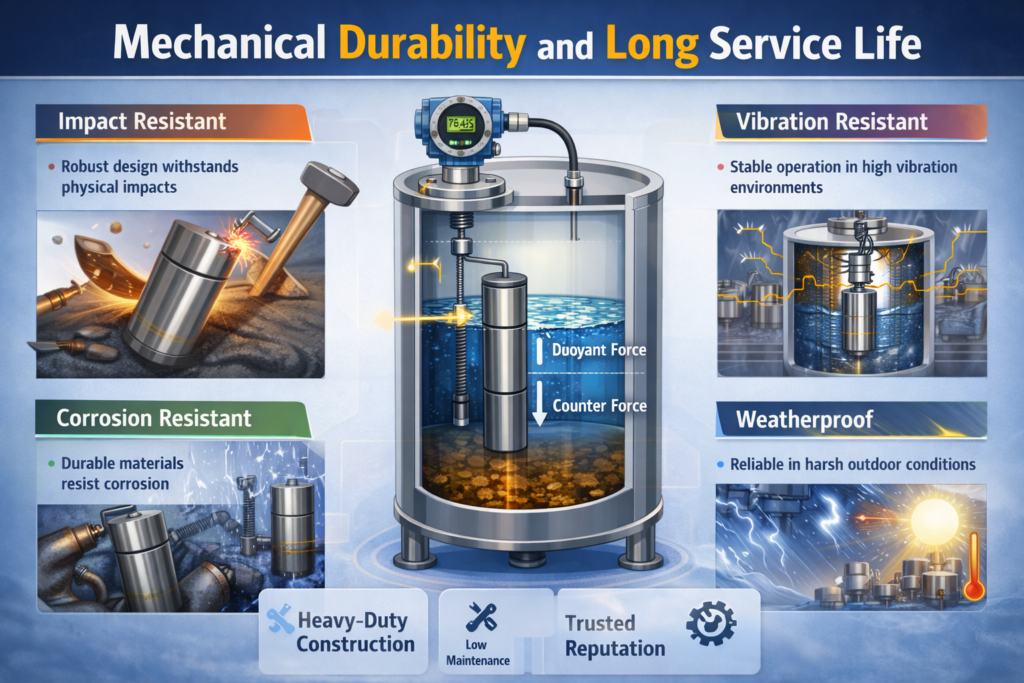
Mechanical Durability and Long Service Life
Industrial plants often operate continuously for years, making equipment longevity a critical consideration. The Displacer Level Transmitter is built with robust materials such as stainless steel and corrosion-resistant alloys, ensuring resistance to chemical attack and mechanical stress.
This durability translates into decades of reliable operation with minimal maintenance, reducing total cost of ownership and improving plant availability.
Safety and Hazardous Area Compliance
Safety is paramount in industrial environments, and the Displacer Level Transmitter is available with approvals for hazardous areas, including ATEX, IECEx, and FM certifications. The Foxboro 244LD can be deployed confidently in explosive atmospheres, ensuring compliance with international safety standards.
This makes it an ideal solution for refineries, chemical plants, and offshore installations where intrinsic safety is mandatory.
Advantages Over Alternative Level Technologies
Compared to differential pressure or non-contact sensors, the Displacer Level Transmitter offers superior stability in challenging applications. It is not influenced by pressure changes, temperature fluctuations, or electrical noise, ensuring consistent measurement where other technologies may drift or fail.
Its ability to measure interface levels and density further enhances its value, reducing the need for multiple instruments in complex processes.
Why Choose Schneider Electric Foxboro 244LD
Selecting the right Displacer Level Transmitter is crucial for long-term process reliability, and the Foxboro 244LD delivers a proven balance of mechanical robustness and digital intelligence. It is designed for industries that demand accuracy, durability, and safety under the harshest operating conditions.
With decades of field-proven performance, the 244LD remains a trusted solution for engineers seeking stable and maintenance-free level measurement.