Radar Level Transmitter for Accurate Non-Contact Level Measurement in Industrial Applications
In modern industrial process automation, accurate and reliable level measurement is essential for maintaining operational efficiency, safety, and regulatory compliance. Industries such as water and wastewater treatment, chemicals, pharmaceuticals, food processing, cement, mining, and power generation require continuous monitoring of liquid and solid levels in tanks, silos, and process vessels. Among the most advanced and reliable technologies available today is the radar level transmitter, which uses electromagnetic waves to measure level without direct contact with the process medium.
Radar level transmitters operate based on the time-of-flight (ToF) principle, where high-frequency microwave signals are transmitted toward the material surface and reflected back to the sensor. The time taken for the signal to return is directly proportional to the distance between the transmitter and the material surface, allowing precise level calculation. Unlike traditional contact-based measurement technologies, radar transmitters are unaffected by process conditions such as temperature, pressure, vapor, dust, or chemical properties, making them ideal for harsh and demanding industrial environments.
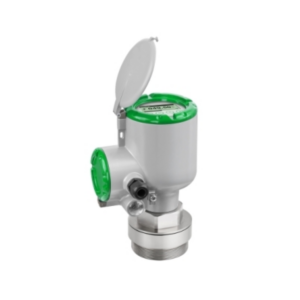
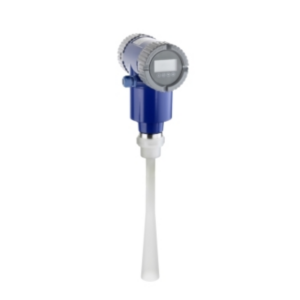
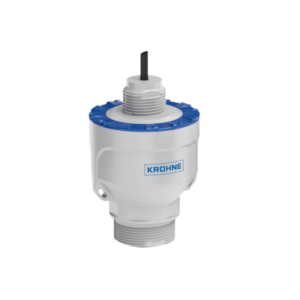
Leading manufacturers such as the company Krohne and the company Schneider Electric offer advanced radar level transmitters designed to deliver high accuracy, stability, and long-term reliability. Models including OPTIWAVE 1520, LR01, and LR65 are widely used across industries for continuous level measurement in both liquid and solid applications.
Working Principle of Radar Level Measurement
Radar level transmitters use microwave signals (typically 24 GHz or 80 GHz frequency range) to measure level. The transmitter emits electromagnetic waves that travel through the air and reflect off the surface of the measured material. The reflected signal is captured by the antenna, and the instrument calculates the level based on signal travel time.
Because radar measurement is non-contact, it eliminates issues associated with sensor fouling, corrosion, or mechanical wear. Advanced signal processing algorithms filter out false echoes caused by tank walls, agitators, or internal structures, ensuring accurate readings even in complex installations.
This technology is particularly beneficial in applications involving aggressive chemicals, high temperatures, high pressures, foam, vapors, or dusty environments, where other measurement methods may fail.
Krohne OPTIWAVE 1520 – Compact Radar Level Transmitter for Liquids
The Krohne OPTIWAVE 1520 is a compact, cost-effective radar level transmitter designed for continuous non-contact level measurement in liquid applications. It is widely used in water treatment plants, chemical storage tanks, pump stations, and industrial process vessels.
The OPTIWAVE 1520 operates using 24 GHz FMCW (Frequency Modulated Continuous Wave) radar technology, which provides stable and accurate level measurement even in the presence of vapors, condensation, or temperature fluctuations. Its compact antenna design makes it suitable for installation in small tanks and confined spaces.
One of the key advantages of the OPTIWAVE 1520 is its maintenance-free operation, as there is no direct contact with the process medium. This significantly reduces downtime and maintenance costs compared to contact-based sensors. The transmitter also offers easy configuration and commissioning, making it ideal for both new installations and retrofitting existing systems.
The device supports standard industrial outputs such as 4–20 mA with HART communication, allowing seamless integration with PLC, SCADA, and DCS systems. Typical applications include:
Water and wastewater storage tanks
Chemical dosing tanks
Pump station level monitoring
Industrial liquid storage vessels
Cooling water and process tanks
Schneider Electric LR01 – Radar Level Sensor for Basic Industrial Applications
The Schneider Electric LR01 radar level transmitter is designed for reliable level measurement in basic industrial applications where cost-effectiveness and simplicity are key requirements. It is suitable for both liquid and light solid applications in tanks and open vessels.
The LR01 uses radar-based measurement technology to provide stable readings independent of process conditions such as temperature or pressure variations. Its compact design allows easy installation in small tanks and utility systems.
The sensor is particularly useful in applications such as:
Water storage tanks
Utility process tanks
Basic industrial level monitoring
Pump control systems
With straightforward configuration and minimal maintenance requirements, the LR01 provides a practical solution for industries seeking reliable level measurement without complex setup.
Schneider Electric LR65 – Advanced Radar Level Transmitter for Harsh Environments
The Schneider Electric LR65 is a high-performance radar level transmitter designed for demanding industrial environments and complex applications. It is suitable for continuous level measurement in both liquids and solids, including applications with dust, foam, or vapor interference.
The LR65 utilizes advanced radar technology with enhanced signal processing capabilities to deliver accurate measurements even in challenging conditions. It is commonly used in industries such as cement, mining, chemicals, power plants, and bulk material handling systems.
One of the major advantages of the LR65 is its ability to measure level in large silos and deep tanks, where other technologies may struggle. Its robust construction ensures reliable operation under extreme environmental conditions, including high temperature, pressure, and mechanical stress.
The LR65 supports integration with industrial automation systems through standard communication protocols, enabling real-time monitoring, remote diagnostics, and process optimization.
Typical applications include:
Cement silos and powder storage
Fly ash and bulk material handling
Chemical storage tanks
Wastewater treatment systems
High-temperature process vessels
Advantages of Radar Level Transmitters
Radar level transmitters offer significant advantages over conventional level measurement technologies. Because they operate on a non-contact principle, they are unaffected by corrosion, contamination, or mechanical wear, resulting in long service life and minimal maintenance.
They provide highly accurate and stable measurements regardless of process conditions such as temperature, pressure, vapor, foam, or dust. This makes them ideal for industries dealing with aggressive chemicals, high-temperature fluids, or dusty bulk materials.
Modern radar transmitters also include advanced features such as digital communication (HART/Modbus), remote configuration, self-diagnostics, and integration with SCADA/DCS systems, enabling smart process automation and predictive maintenance.
Industrial Applications Across Sectors
Radar level transmitters are widely used across industries for continuous level monitoring. In water and wastewater treatment plants, they measure tank levels, reservoirs, and sludge storage systems. In chemical industries, they provide safe and accurate level measurement in tanks containing corrosive or hazardous liquids.
In food and beverage processing, radar transmitters ensure hygienic, non-contact measurement of liquid levels in storage tanks and process vessels. In cement and mining industries, they are used for level measurement in silos containing powders, granules, and bulk solids.
Power plants and manufacturing industries use radar level transmitters to monitor cooling water tanks, fuel storage systems, and process vessels, ensuring reliable operation and preventing equipment damage.