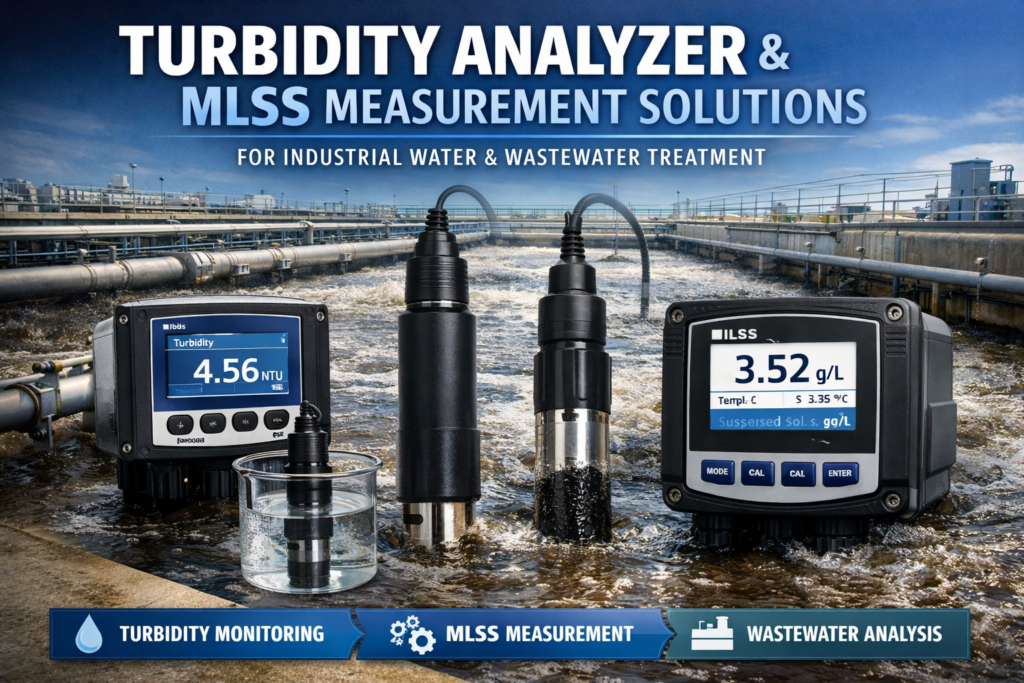
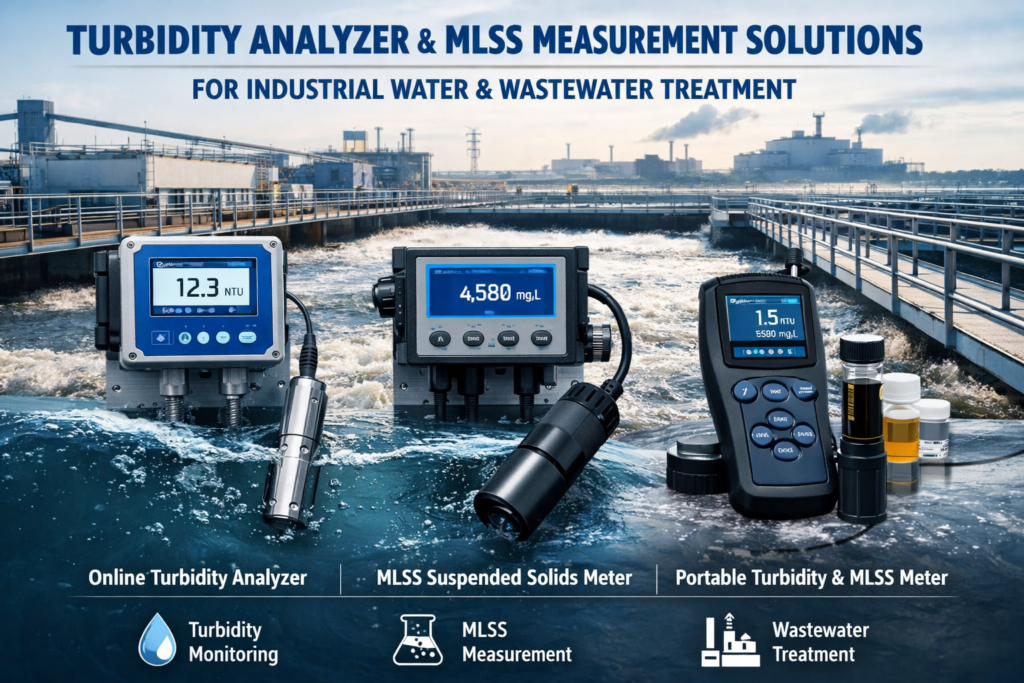
Turbidity Analyzer and MLSS Measurement Solutions for Industrial Water & Wastewater Treatment
Industrial water and wastewater treatment plants today operate under increasing pressure to improve efficiency, reduce operating costs, and comply with stringent environmental regulations. Parameters such as turbidity and Mixed Liquor Suspended Solids (MLSS) play a decisive role in determining treatment performance, effluent quality, and biological process stability. Continuous and accurate monitoring of these parameters is no longer optional—it is essential for reliable plant operation, regulatory compliance, and long-term sustainability.
Modern online analyzers such as the Forbes Marshall Aqua 4Trans Turbidity and MLSS Analyzer provide advanced analytical measurement solutions designed to meet the complex demands of STPs, ETPs, industrial water loops, and process utilities. By delivering real-time data with high accuracy and minimal maintenance, these systems empower operators to make informed decisions, optimize processes, and prevent costly failures.
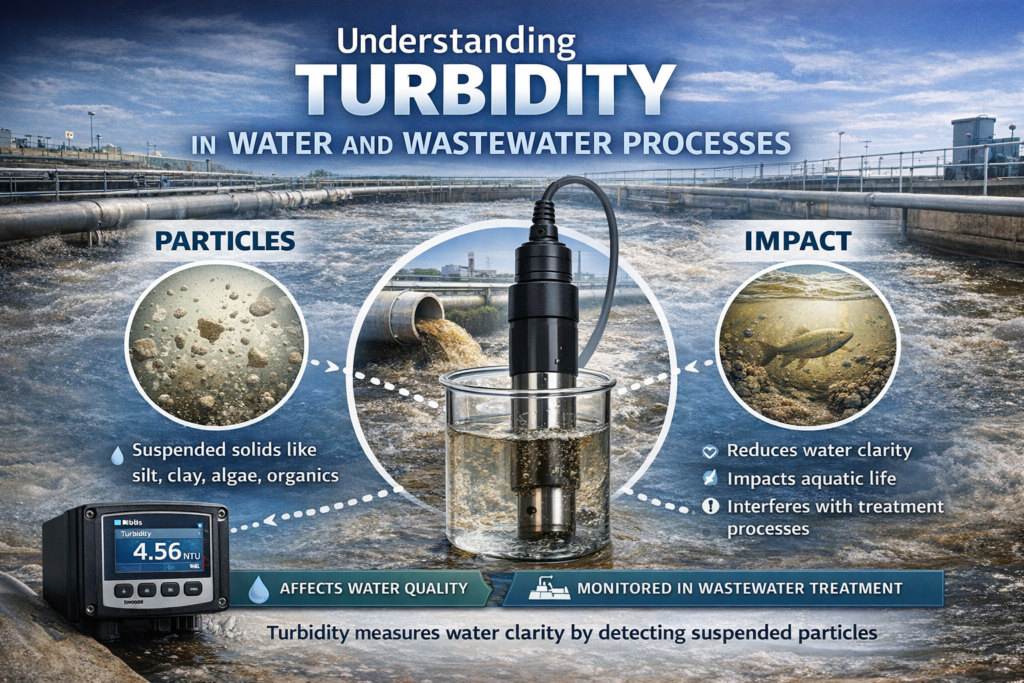
Understanding Turbidity in Water and Wastewater Processes
Turbidity refers to the cloudiness or haziness of water caused by suspended particles such as silt, clay, organic matter, microorganisms, and chemical precipitates. In industrial and municipal treatment systems, turbidity is one of the most important indicators of water quality and process efficiency. Elevated turbidity levels often indicate poor clarification, filter breakthrough, excessive solids carryover, or microbial growth within the system.
In sewage treatment plants (STPs) and effluent treatment plants (ETPs), turbidity measurement helps operators assess the performance of primary clarifiers, secondary clarifiers, tertiary filtration units, and polishing systems. In industrial applications such as pharmaceuticals, food and beverage, breweries, power plants, and chemical industries, turbidity monitoring ensures product quality, protects downstream equipment, and maintains compliance with discharge norms.
Continuous turbidity measurement is especially critical because manual sampling provides only snapshot data and often fails to detect sudden process upsets. Online turbidity analyzers provide uninterrupted visibility into system behavior, allowing proactive intervention before quality deterioration occurs.
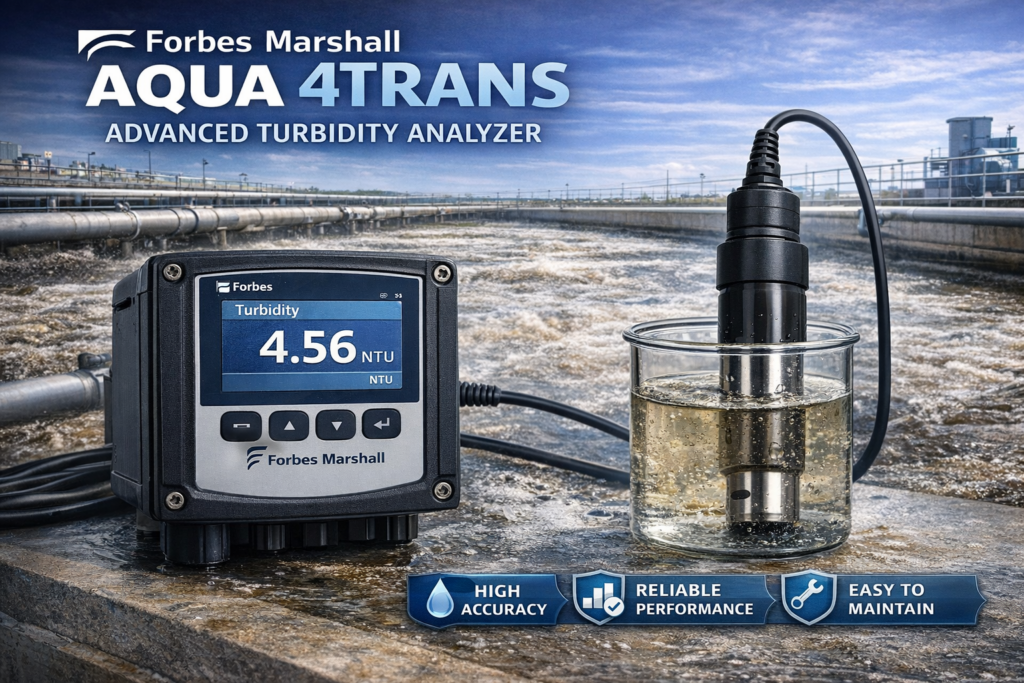
Forbes Marshall Aqua 4Trans – Advanced Turbidity Analyzer
The Forbes Marshall Aqua 4Trans is a multi-parameter analytical transmitter capable of accurate turbidity and MLSS measurement using advanced optical sensing technology. Designed for industrial reliability, the Aqua 4Trans offers stable performance even under harsh operating conditions commonly found in wastewater and industrial process environments.
The turbidity measurement in Aqua 4Trans is based on the nephelometric principle, compliant with ISO 7027 standards, where scattered light at a 90-degree angle is measured to determine turbidity in NTU. This method provides excellent sensitivity and repeatability across a wide measurement range, from ultra-low turbidity in DM or RO water to high turbidity levels in industrial effluents and sludge applications.
One of the key benefits of the Aqua 4Trans turbidity analyzer is its robust optical design with self-cleaning capability, which significantly reduces fouling caused by sludge, algae, or chemical deposits. This results in lower maintenance requirements and longer service intervals compared to conventional analyzers.
By delivering continuous turbidity data directly to PLC, SCADA, or DCS systems, the Aqua 4Trans enables real-time monitoring, alarm generation, and automated control of treatment processes. This level of integration is essential for modern plants aiming to improve operational efficiency and reduce manual intervention.
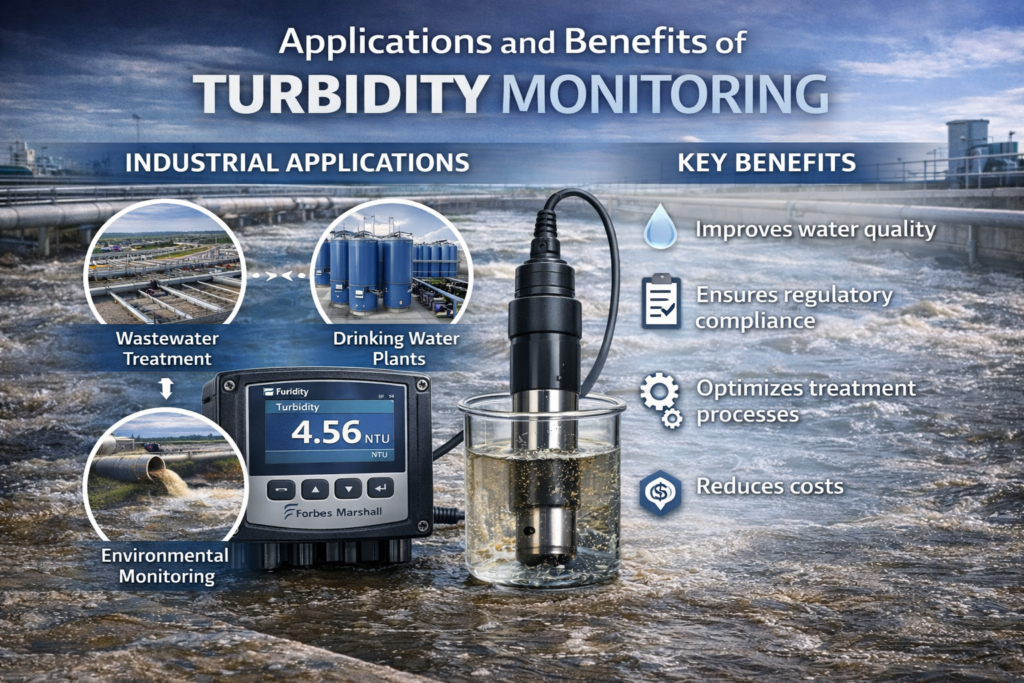
Applications and Benefits of Turbidity Monitoring
Accurate turbidity measurement using Aqua 4Trans delivers substantial operational benefits across multiple applications. In STPs and ETPs, turbidity monitoring of clarifier overflow helps detect sludge carryover early, preventing downstream filtration overload and non-compliant discharge. In tertiary treatment systems, turbidity data validates filter performance and signals backwashing requirements, improving filter life and water quality consistency.
In industrial water systems, turbidity analyzers protect cooling towers, heat exchangers, boilers, and RO membranes from fouling and scaling. Monitoring turbidity in cooling tower bleed-off helps maintain optimal cycles of concentration, while RO feed turbidity measurement prevents membrane fouling and reduces chemical cleaning frequency.
From a regulatory perspective, online turbidity monitoring ensures compliance with CPCB, SPCB, ISO, and EPA discharge standards, reducing the risk of penalties, shutdowns, and reputational damage. The ability to demonstrate continuous compliance through logged data is particularly valuable during environmental audits and inspections.
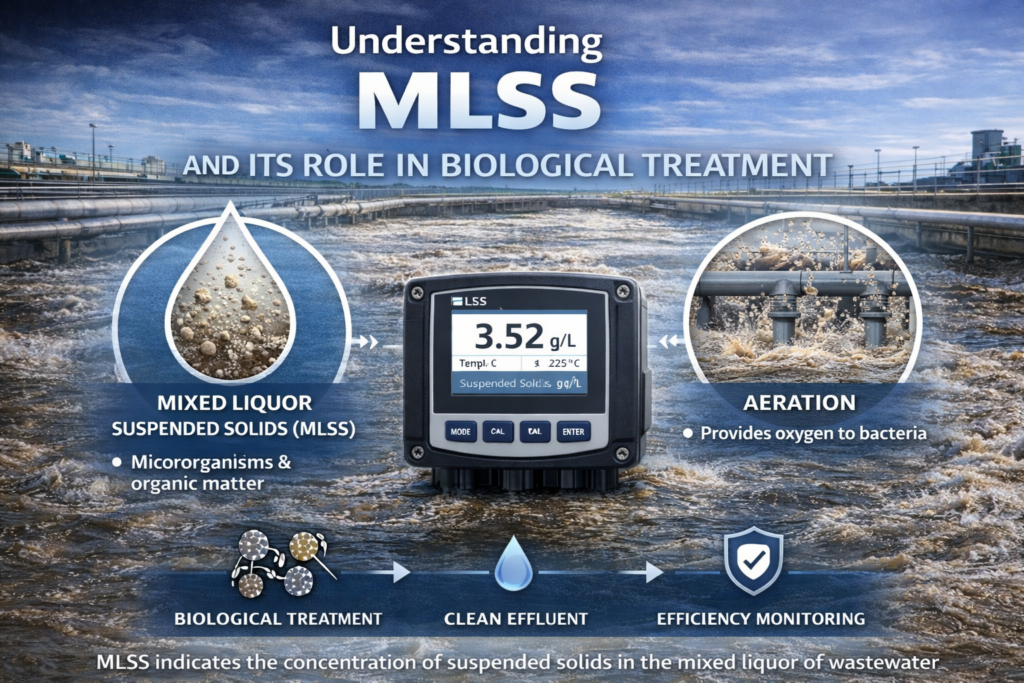
Understanding MLSS and Its Role in Biological Treatment
Mixed Liquor Suspended Solids (MLSS) represents the concentration of suspended solids, primarily microorganisms, present in the aeration tank of an activated sludge process. MLSS is a critical control parameter that directly affects biological treatment efficiency, sludge settling characteristics, oxygen demand, and energy consumption.
Maintaining MLSS within an optimal range ensures efficient BOD and COD removal, stable nitrification and denitrification, and proper sludge settleability. Low MLSS levels can lead to poor treatment performance and high effluent BOD, while excessively high MLSS can cause sludge bulking, foaming, poor oxygen transfer, and increased aeration costs.
Because MLSS levels fluctuate continuously due to variations in influent load, sludge age, and process conditions, online MLSS measurement is essential for effective process control. Manual gravimetric analysis, while accurate, is labor-intensive and unsuitable for real-time control.
Aqua 4Trans – Online MLSS Measurement Solution
The Forbes Marshall Aqua 4Trans MLSS Analyzer provides reliable online measurement of MLSS using optical correlation technology, where suspended solids concentration affects light absorption and scattering. The analyzer continuously converts optical signals into MLSS values expressed in mg/L, offering operators real-time insight into biological process conditions.
The Aqua 4Trans supports a wide MLSS measurement range, making it suitable for both municipal STPs and high-load industrial ETPs. Its stable sensor design ensures consistent performance even in challenging environments with high solids concentration, variable temperature, and fluctuating flow conditions.
A major advantage of online MLSS monitoring with Aqua 4Trans is its ability to provide continuous feedback for process optimization. MLSS data can be used to control return activated sludge (RAS) rates, waste activated sludge (WAS) flow, and aeration intensity, resulting in improved treatment efficiency and reduced energy consumption.
By optimizing blower operation based on actual MLSS demand, plants can achieve significant energy savings, as aeration typically accounts for the largest portion of power consumption in biological treatment systems.
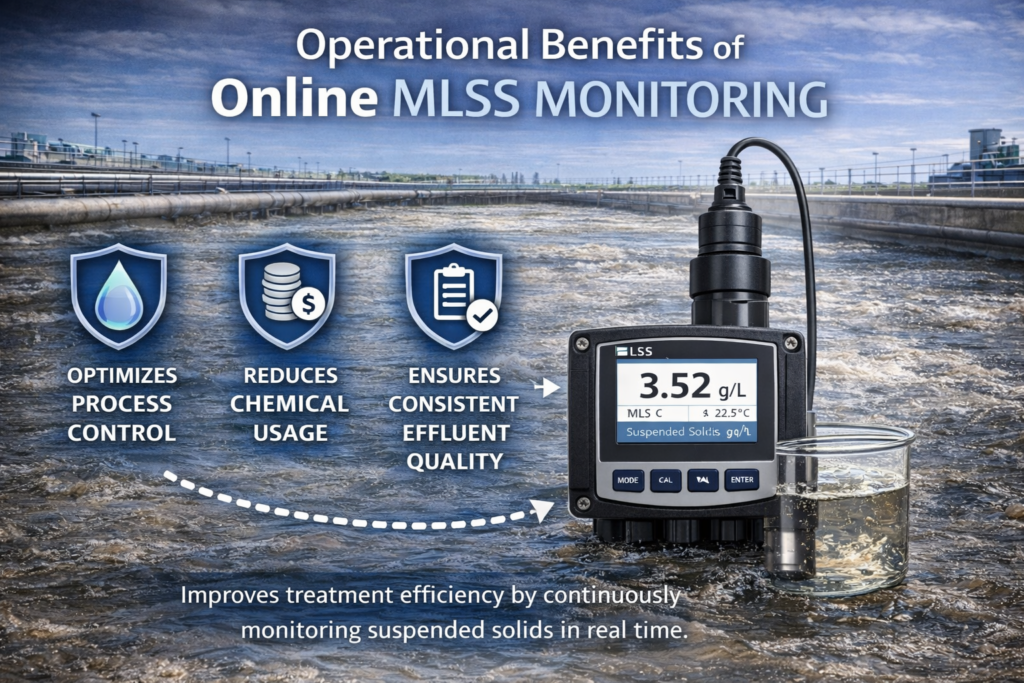
Operational Benefits of Online MLSS Monitoring
Implementing online MLSS measurement using Aqua 4Trans offers multiple tangible benefits. Operators gain immediate visibility into biological process health, enabling early detection of issues such as sludge washout, biomass loss, or shock loading. This proactive approach minimizes process upsets and improves overall plant stability.
Consistent MLSS control improves sludge settling characteristics, reducing the risk of sludge bulking and foaming, which can otherwise compromise clarifier performance and effluent quality. Stable MLSS also leads to more predictable sludge production, simplifying sludge handling and disposal planning.
From a compliance standpoint, optimized MLSS control ensures consistent effluent quality, helping plants meet discharge norms related to BOD, COD, and TSS. The availability of continuous historical data further supports performance analysis, troubleshooting, and regulatory reporting.
Integration, Automation, and Data Management
The Forbes Marshall Aqua 4Trans is designed for seamless integration into modern automation architectures. With 4–20 mA outputs, Modbus communication, and relay alarms, the analyzer connects easily to existing PLC, SCADA, or DCS systems. This integration enables centralized monitoring, automated control actions, and remote diagnostics.
Continuous data logging allows plant managers to analyze trends, identify inefficiencies, and implement predictive maintenance strategies. By correlating turbidity and MLSS data with flow, load, and energy consumption, plants can achieve a higher level of operational intelligence and cost control.
Why Forbes Marshall Aqua 4Trans Is Beneficial for Industry
The Aqua 4Trans stands out as a comprehensive analytical solution due to its industrial-grade construction, measurement accuracy, and low lifecycle cost. Its multi-parameter capability reduces the need for multiple standalone instruments, simplifying installation and maintenance.
Forbes Marshall’s strong presence in India and global markets ensures reliable technical support, availability of spares, and long-term service assurance—critical factors for continuous process industries. The Aqua 4Trans is engineered to deliver consistent performance in demanding environments, making it a preferred choice for municipal bodies, EPC contractors, and industrial end users.
SEO-Focused Industry Relevance
From a digital perspective, turbidity and MLSS analyzers are high-intent search topics for industrial buyers, consultants, and plant operators. Content centered around Turbidity Analyzer for STP and ETP, MLSS online monitoring system, and Forbes Marshall Aqua 4Trans addresses both technical and commercial search intent, improving website visibility and lead quality.
By providing detailed, technically accurate, and application-oriented information, this content supports improved Google indexing, longer page engagement, and higher authority ranking in the industrial water treatment domain.