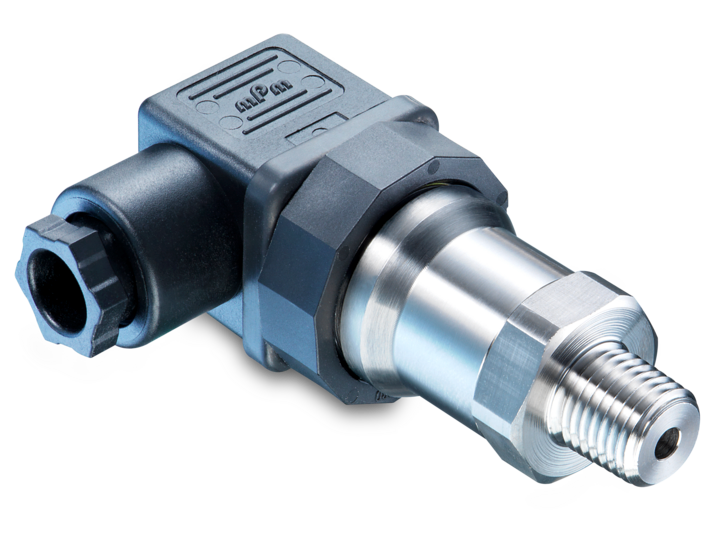
Miniature pressure transmitters provide reliable pressure measurement where space is limited, response time is critical, or integration into compact machines and OEM skids is required. These instruments combine compact mechanical design with modern digital electronics to deliver 4–20 mA (and often HART/IO-Link) outputs, temperature compensation, and robust protection against shock and vibration.
Industrial automation and motion control (cylinders, valves)
HVAC control panels and small chillers
Mobile equipment, compressors, vacuum pumps
Lab and pilot plants where compact sensors are required
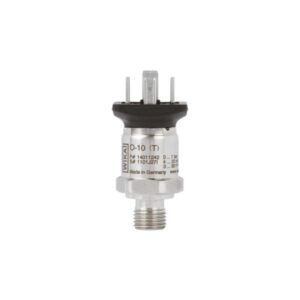
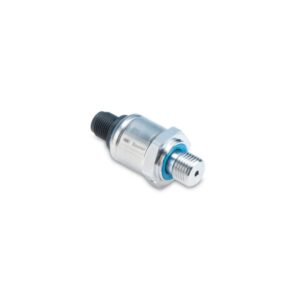
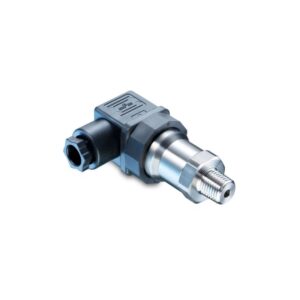
Models covered: • Baumer CTX — rugged miniature transmitter with compact housing and options for electrical interfaces. • Baumer PP20S — hygienic/compact pressure sensor option with high stability for food, pharma equipment. • WIKA O10 — proven compact transmitter for OEM applications, strong temperature performance and electrical options.
2. Technical Description
Miniature transmitters typically consist of:
Pressure port & process connection: ¼″–½″ BSP/NPT or M10/M12 miniature threads; stainless-steel wetted parts.
Sensing element: Silicon piezoresistive or thin-film capacitive sensor; bonded to a stainless diaphragm (SS316L/hastelloy options).
Electronics housing: Compact IP65–IP67 rated enclosure; sometimes polyamide or stainless housing for harsh environments.
Signal conditioning: On-board microcontroller performs linearization, temperature compensation, and generates 4–20 mA (2-wire) or digital outputs (HART/IO-Link).
Temperature compensation: Internal RTD or digital compensation map for accurate reading across temperature.
Electrical connector: M12 plug, flying lead, or integrated cable gland; some models have PCB-mounted options for OEM board integration.
3. Working Principle
Miniature pressure transmitters convert mechanical pressure into an electrical signal using a piezoresistive / capacitive sensing element:
Pressure input acts on a thin diaphragm.
Diaphragm deflection transfers stress to the sensor (silicon piezoresistor bridge or capacitive arrangement).
The sensor produces a small electrical analogue signal proportional to pressure.
Signal conditioning (amplification, temperature compensation, linearization) is performed by onboard electronics.
Output is provided as 4–20 mA (loop powered) and optionally as HART/IO-Link/RS-485 for diagnostic and configuration.
Key technical points:
Piezoresistive sensors are fast (ms response) and suitable for dynamic pressure changes.
Capacitive sensors offer excellent drift performance and stability in aggressive environments.
Most miniature transmitters include ESD and reverse-polarity protection and short-circuit proof output stages.
4. Typical Technical Specifications
Pressure ranges: 0–1 bar … 0–600 bar (model dependent; common miniature ranges 0–1, 0–2.5, 0–10, 0–25 bar)
Accuracy: ±0.25% FS, ±0.5% FS (typical)
Long-term stability: <0.2% FS/year
Temperature range: –40 °C to +125 °C (electronics & process dependent)
Output: 4–20 mA (two-wire); optional HART / IO-Link / RS-485
How to choose: select CTX for rugged automated machinery, PP20S where hygienic cleanability matters in small footprint equipment, and WIKA O10 when a cost-effective, highly integrable OEM transmitter with classic electrical interfaces is required.
6. Installation & Mounting Guidelines
Mounting position: Follow manufacturer; install so the process port faces downward or sideways to avoid trapping air for liquid lines.
Electrical wiring: Use shielded cable if long runs present EMI; follow polarity and loop-power guidelines. For HART/IO-Link, use the recommended wiring topology and grounding.
Impulse lines: For dynamic pressure with pulsation, add a snubber or restrictor; for steam service, avoid miniature transmitters unless remote seals are used.
Torque & sealing: Use correct torque for thread size; use PTFE tape sparingly and do not over-torque small M10 connections.
Panel mounting / PCB: For PCB-mount variants, ensure correct soldering procedures and mechanical support to avoid stress on the sensor.
7. Diagnostics, Calibration & Field Commissioning
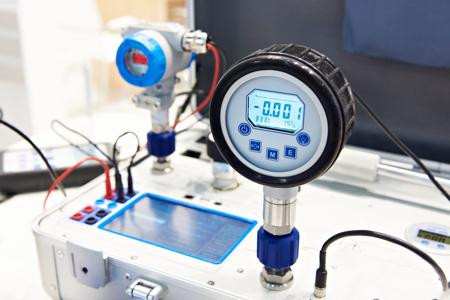
On-site zero/span checks are possible for two-wire 4–20 mA models using loop calibrators.
HART / IO-Link models allow remote configuration, live diagnostics (sensor health, temperature drift, overpressure events).
Calibration: recommend annual calibration for critical loops; maintain traceable certificates for regulatory requirements.
Fault indications: some models provide discrete fault output (e.g., <3.8 mA or >21 mA) or HART fault flags.
8. Troubleshooting & Maintenance
Symptom: No output / 0 mA — check loop power, wiring polarity, shorted output.
Symptom: Erratic signal — EMI; verify shielding and grounding; evaluate mechanical vibration.
Symptom: Drift over time — perform re-zero and span check; if outside tolerance, return for factory calibration.
Symptom: Loss of accuracy after overpressure — sensor may be overloaded; use higher range or overpressure protection.
9. Selection Checklist
Required pressure range & overpressure factor
Process medium and chemical compatibility (select wetted material)
Electrical interface (4–20 mA, HART, IO-Link)
Environmental protection (IP rating, temperature)
Mounting style (threaded, M12, PCB)
Accuracy class required for control vs. monitoring
Hazardous area certification (ATEX/IECEx) if needed
10. Typical Industries & Applications
OEM packaging & filling machines (pressure control & leak detection)
Dairy & pharma small skid instrumentation (hygienic PP20S)
Pneumatic valve island pressure monitoring & compressors
Laboratory pilot plants and test benches (compact sensors)
Mobile equipment and agricultural machinery (robust CTX variants)